
A buyer contacted SERL based on recommendations from their estate agent.
The client requested our expertise in structural engineering reports, specifically in the South-West London region. They needed the report to ensure peace of mind due to concerns highlighted in their RICS Home Survey Level 2, which noted cracking on the front elevation possibly due to subsidence.
SERL offers two types of structural reports:
1) A localised, specific, and limited Specific Structural Inspection (SSI) report or a Structural Engineers Defect Report.
2) A broader General Structural Inspection Report (GSI) or Structural Engineers General Movement Report which focuses only on matters of cracking and movement.
In response to the client’s requirements our qualified Chartered Structural Engineer recommended a Specific Structural Inspection report.
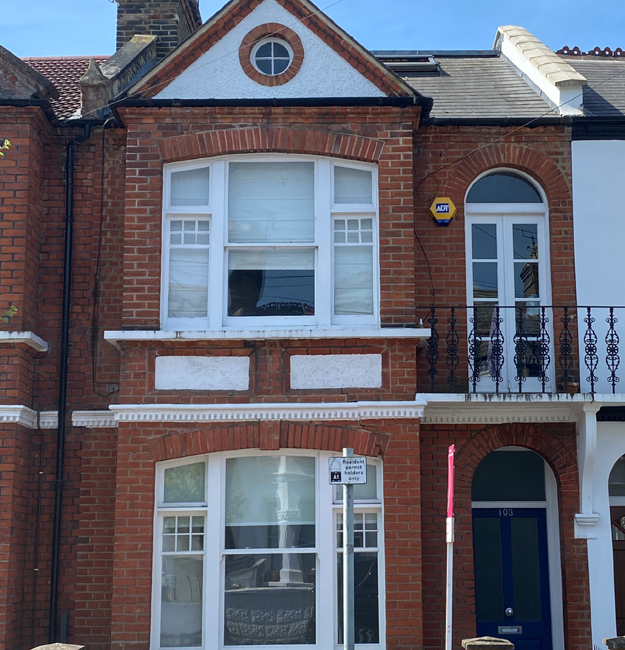
The property was a converted flat situated within a large Victorian house spread across three floors.
The structure featured typical solid brick exterior walls, along with suspended timber floors and a timber-framed roof.
The geological composition of the area was varied, located at the boundary between London Clay and Kempton Park Gravel soils. Several trees were located nearby.
Our Chartered Structural Engineer found that the property showed no signs of subsidence at the front, and the bay window was well connected to the front elevation.
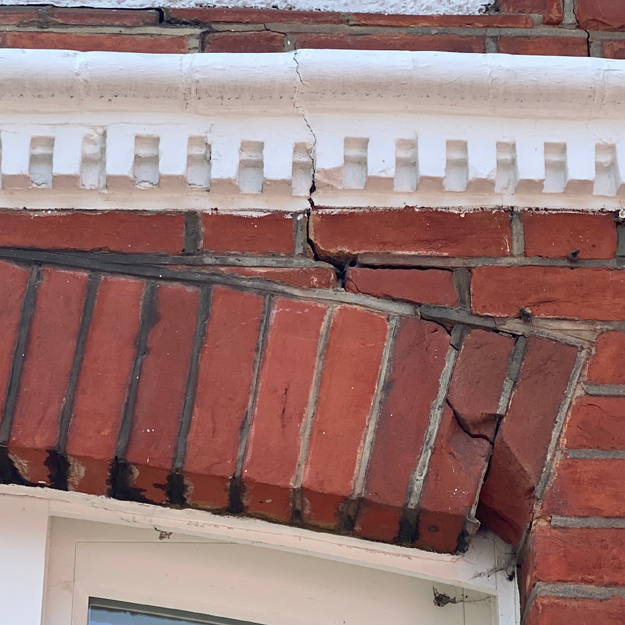
However, there was noticeable but historical cracking in the brick arch above the bay window.
The diagonal crack pattern immediately suggested to us, as specialists, that the brick arch had failed due to one brick becoming crushed and damaged, possibly from frost or similar conditions. The stability of the brick arch depends on the compressive forces between the bricks, so if one brick loosens, the arch is likely to deflect, leading to further cracking above.
We were confident that the brick arch could be effectively repaired using conventional cementitious grout and by propping up the arch during the repair process. We estimated the costs for this work to be between £1,000 and £2,000.
It is crucial during such repairs to inspect the backing lintel behind the brick arch to ensure it is not the original timber, which is often prone to dampness, infestation, or decay. Replacing the lintel, although advisable, can be more intrusive and costly than the repair itself, as it may disrupt the internal decor.
Overall, the property exhibited no signs of subsidence, and the repair costs would be distributed among the various lessees, resulting in minimal expense per flat.
We provided a positive report to the client, allowing them to make an informed decision on whether to proceed.