
The long-term property owner contacted SERL due to issues with cracking and water ingress in their bay window. After consulting two different experts, they received conflicting advice on whether to repair or entirely rebuild the bay window. Consequently, they sought an independent third-party opinion.
SERL was contacted by the property owner who was seeking a reputable, independent, and highly experienced structural engineering firm specialising in Structural Engineers Reports for residential properties in Peckham and the South East London area.
In response to the client’s requirements our qualified Chartered Structural Engineer recommended a Specific Structural Inspection report.
SERL offers two types of structural reports:
1) A localised, specific, and limited Specific Structural Inspection (SSI) report or a Structural Engineers Defect Report.
2) A broader General Structural Inspection Report (GSI) or Structural Engineers General Movement Report which focuses only on matters of cracking and movement.

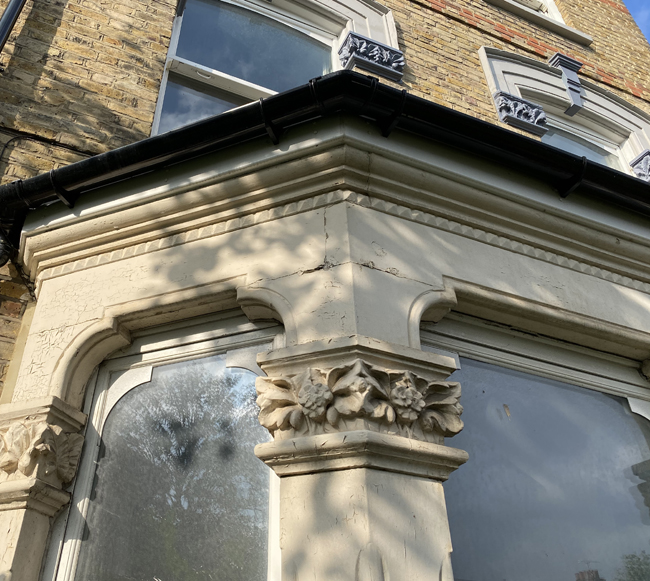
The property was a typical mid-terrace Victorian family home on two floors. Unusually, the bay window was positioned to the rear addition flank wall. It featured a simple, three-sided splayed or angular bay with a flat roof.
The internal plaster showed extensive damp and numerous cracks. Externally, there was minor cracking in the render and windowsills, but no significant damage.
Following our comprehensive inspection of the bay window, both internally and externally, and through various spirit level measurements, we found no evidence of subsidence. Consequently, there is no need for a complete reconstruction of the bay window structure.
However, we identified defects in the secondary glazing window and windowsills, leading to water ingress. These issues stem from the DIY windows installed over two decades ago. Previous attempts to patch repair these windows had been ineffective. We advised that structural works were unnecessary, and no insurance claim was warranted.
Instead, the problem pertains to maintenance and repair. Unfortunately, the windows would need to be replaced with a choice between purpose-made joinery, UPVC, or aluminium, according to the client’s preference.
The client was relieved to receive guidance from an experienced chartered structural engineer. Their previous consultations had been with either a builder or a highly qualified academic who, with respect, lacked the necessary professional training and experience.
Our advice spared the client the stress of reconstructing the entire bay structure, though costs were still unavoidable due to the defective windows needing attention.