
Our client had recently purchased a fairly dilapidated cottage in East Molesey, Surrey, which required a complete refurbishment. They had commissioned an RICS survey, which identified cracking to the front right-hand side of the property.
Before commencing the planned refurbishment works, the client considered it prudent to appoint a Chartered Structural Engineer to investigate the cracking and determine whether it indicated significant structural movement or other underlying defects. The client also asked us to undertake a wider structural inspection of the property. This provided an opportunity to identify any other structural issues that might need to be considered as part of the refurbishment.
With experience providing structural inspections and Structural Engineer’s Reports across Surrey and London, the client approached SERL for an independent professional assessment of the property.
In response to the client’s requirements our qualified Chartered Structural Engineer recommended a General Structural Inspection report.
SERL offers two types of structural reports:
1) A localised, specific, and limited Specific Structural Inspection (SSI) report or a Structural Engineer’s Defect Report.
2) A broader General Structural Inspection Report (GSI) or Structural Engineers General Movement Report which focuses only on matters of cracking and movement.
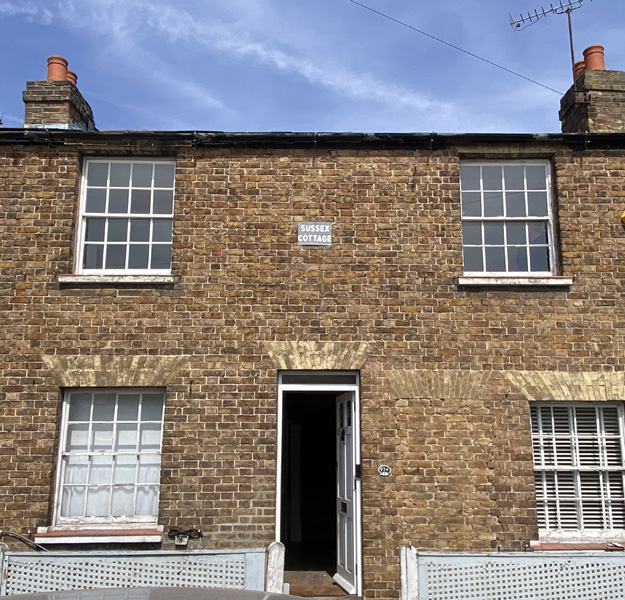
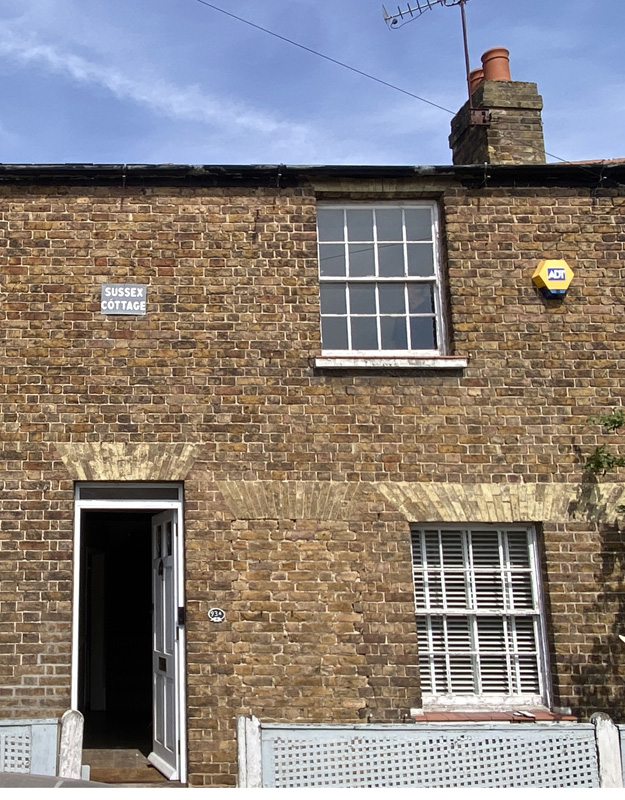
The property was a conventional but unusually old cottage, believed to have been constructed in the late 1700s. Its location close to the River Thames was also an important consideration when assessing the construction, ground conditions and potential causes of movement.
The cottage was constructed with:
The local geology comprises Kempton Park Gravel overlying London Clay, reflecting the property’s location close to the River Thames and River Mole. Understanding the local ground conditions is an important part of assessing cracking, settlement and potential movement in older properties.
Our Chartered Structural Engineer carried out a detailed inspection of the East Molesey property, including the cracking identified to the front elevation and the remainder of the building.
Given that the cottage was approximately 250 years old, it exhibited some historic settlement and movement consistent with its age and construction. The most notable defect was older cracking to the front elevation. Although this cracking warranted repair, our inspection found that it was not considered to be evidence of significant ongoing structural movement or serious subsidence.
The cracking appeared to be primarily associated with historic settlement and, more significantly, poor bonding within the original brickwork. Taking into account the age and construction of the cottage, the nature of the cracking and the condition of the remainder of the property, we did not consider the defect to be a major structural concern.
Importantly, our wider inspection found the remainder of the property to be structurally sound.
Our assessment concluded that the structural issues identified at the East Molesey cottage were relatively minor and did not represent a significant obstacle to the client’s refurbishment plans.
We recommended that the existing cracking to the front elevation should be repaired using correct resin crack repair techniques. The repair was relatively straightforward and was expected to cost only a few hundred pounds.
No significant structural defects were identified elsewhere in the property, meaning that the client could proceed with their refurbishment plans with greater confidence and without the need for extensive structural remedial works.
For older properties, particularly those requiring extensive renovation, a Structural Engineer’s Report before refurbishment can provide valuable reassurance and help identify defects that may otherwise become more costly to address once building work has started.